
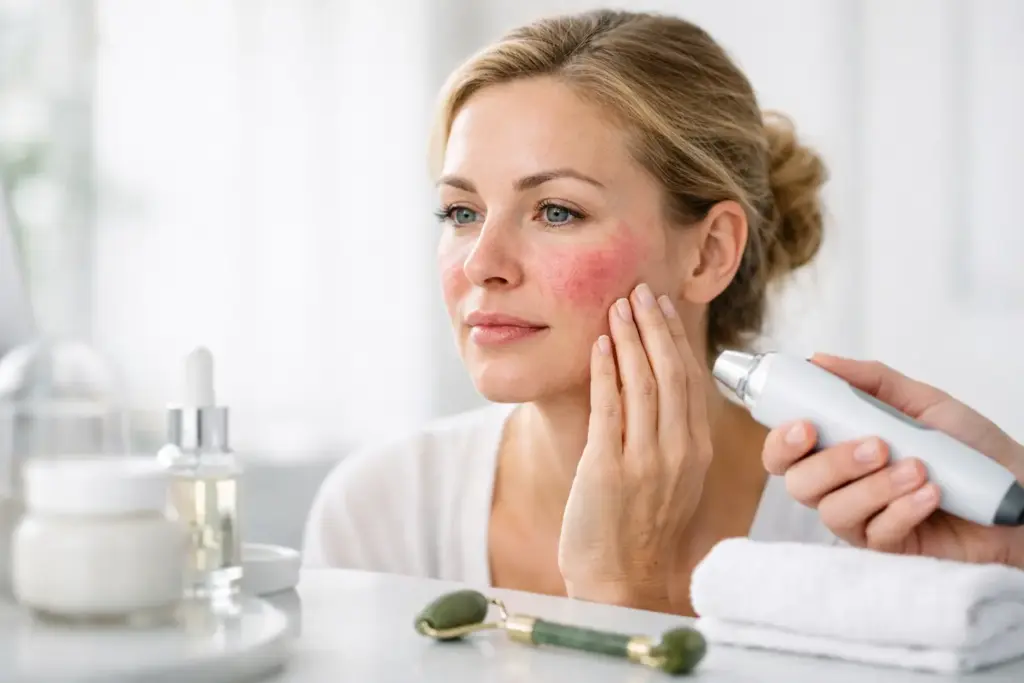
Rosacea can feel unpredictable: skin that looked calm in the morning may be hot, flushed and covered in spots by lunchtime. The best treatment for rosacea flare ups is rarely one product alone. It is a practical combination of identifying your pattern, protecting a sensitive skin barrier and using clinician-prescribed treatment when symptoms need more than skincare.
Rosacea is common, but it is not simply ‘adult acne’ or a sign that skin is unclean. It is an inflammatory condition that can cause persistent redness, visible blood vessels, burning, dryness and acne-like bumps, most often across the cheeks, nose, forehead and chin. Symptoms can come and go, and treatment should reflect what is actually happening to your skin.
What is the best treatment for rosacea flare ups?
For many people, the most effective approach is a consistent, gentle routine alongside a treatment chosen for their main symptom. If bumps and pustules are the problem, prescription creams or gels may reduce inflammation. If temporary facial redness is most troubling, a different medicine may be appropriate. Persistent visible vessels and thickening skin need a clinician’s assessment and may respond better to specialist procedures than to creams alone.
There is no single cure, and a treatment that works brilliantly for one person may irritate another. The goal is usually fewer flare-ups, less discomfort and clearer, calmer skin over time. Improvement is often gradual, so give a suitable treatment the time advised by your clinician rather than changing products every few days.
Start by calming the skin barrier
During an active flare-up, simplify. Wash with lukewarm water and a mild, fragrance-free cleanser, using fingertips rather than a flannel, scrub or cleansing brush. Pat skin dry gently, then apply a plain moisturiser formulated for sensitive skin. A broad-spectrum SPF 30 or higher is a daily essential, including on cloudy UK days, because ultraviolet light is a frequent trigger for many people with rosacea.
Avoid exfoliating acids, facial scrubs, alcohol-heavy toners and strongly fragranced products while your skin is reactive. Retinoids and vitamin C can be useful in some skincare routines, but they can sting or worsen redness in rosacea-prone skin. Do not assume that a tingling sensation means a product is working.
Green-tinted cosmetic products can help neutralise visible redness for occasions when you want coverage. Choose non-comedogenic, fragrance-free formulas and remove them gently. Concealing redness is not treatment, but feeling more comfortable in your skin matters too.
Prescription treatments a clinician may recommend
A clinician will look at your symptoms, medical history, current medicines and the products you already use before deciding whether prescription treatment is appropriate. Common options for inflammatory rosacea include topical ivermectin, azelaic acid and metronidazole. These can reduce the red bumps and pus-filled spots associated with rosacea, although results may take several weeks.
Azelaic acid can be particularly helpful for bumps and inflammation, but some people experience stinging or dryness, especially when starting. Applying a small amount exactly as directed and using moisturiser can improve tolerability. If irritation persists, speak with the prescribing clinician rather than pushing through worsening symptoms.
For more widespread or stubborn inflammatory flare-ups, a clinician may consider a course of oral antibiotics such as low-dose doxycycline. In this setting, they are used primarily for their anti-inflammatory effect, not because rosacea is caused by poor hygiene or an infection. These medicines are not right for everyone, including some people who are pregnant, breastfeeding or taking interacting medicines.
Where flushing or persistent facial redness is the main concern, medicines that temporarily constrict superficial blood vessels may be considered. They can reduce redness for some people, but effects vary and a small number of people experience rebound redness. This is why a proper assessment and clear instructions on use matter.
Prescription treatment should never be borrowed from someone else or selected solely from a social-media recommendation. Rosacea can resemble acne, dermatitis, perioral dermatitis, lupus and other skin conditions, and the wrong treatment can delay improvement.
Find your personal triggers without making life smaller
Triggers are individual. Heat, sunlight, alcohol, spicy foods, hot drinks, exercise, stress and sudden changes in temperature are all common, but avoiding everything is neither realistic nor necessary. Instead, keep a simple note on your phone for two to four weeks. Record flare-ups alongside meals, weather, skincare, exercise and stress levels. Patterns are more useful than one-off coincidences.
If hot drinks trigger flushing, let them cool slightly. If exercise is a trigger, try a cooler room, lighter layers, a fan or shorter sessions rather than giving it up. If alcohol seems to worsen symptoms, reducing the amount or choosing alcohol-free alternatives may help. For cold weather, protect your face with a soft scarf and avoid moving straight from freezing outdoor air into intense central heating where possible.
Stress does not cause rosacea, and flare-ups are not your fault. However, stress can make flushing more noticeable for some people. Building in manageable recovery habits, such as a walk, breathing exercises or a consistent sleep routine, can support treatment without turning skincare into another source of pressure.
When rosacea needs specialist treatment
Creams and tablets are not always the whole answer. Visible thread veins, also called telangiectasia, often do not disappear with topical treatments. Laser or light-based procedures can reduce their appearance, but suitability depends on skin tone, the type of redness and the provider’s clinical experience. These treatments usually require more than one session and may not be suitable during an active flare.
A persistently enlarged or bumpy nose can be a sign of rhinophyma, a less common form of rosacea. It is treatable, but should be assessed by a GP, dermatologist or appropriately qualified clinician. Do not try to treat it with harsh over-the-counter acne products.
Rosacea can also affect the eyes. Gritty, dry, watery or red eyes, swollen eyelids, recurrent styes and sensitivity to light may indicate ocular rosacea. Arrange a prompt clinical assessment, particularly if symptoms keep returning. Urgent advice is needed for eye pain, changes in vision, marked light sensitivity or a very red eye.
A safer way to build your treatment plan
Start with gentle skincare and daily sun protection, then seek clinical advice if you have persistent redness, recurring spots, burning or symptoms that affect confidence and daily life. Take clear photographs during flare-ups if your skin looks different by the time of an appointment. They can help a clinician understand the pattern.
Online UK Pharmacy offers clinician-reviewed consultations for suitable skin concerns, allowing treatment options to be considered discreetly and without a rushed waiting-room appointment. Your information should be assessed by a UK-based prescriber, with treatment dispensed only where it is clinically appropriate. A regulated pharmacy should make the process clear, including what to expect, possible side effects and when you need in-person care.
Avoid topical steroid creams on facial redness unless a clinician has specifically told you to use them. While steroids can temporarily make skin look calmer, they may worsen rosacea over time or trigger steroid-induced rosacea. Similarly, be cautious with heavily marketed ‘miracle’ creams, essential oils and strong acne treatments. Sensitive skin usually responds better to consistency than to experimentation.
When to seek medical advice promptly
Book a GP or clinician review if your symptoms are new, rapidly worsening, painful, affecting your eyes, causing swelling, or not improving after a reasonable period of gentle care. Seek urgent help for vision changes, severe eye pain, facial swelling with breathing difficulty, or a widespread rash that develops suddenly.
The right rosacea treatment should make everyday life feel less ruled by your skin. Start gently, give evidence-based treatment time to work and involve a clinician when flare-ups keep returning. Calm, reliable care is usually more effective than chasing the next quick fix.