
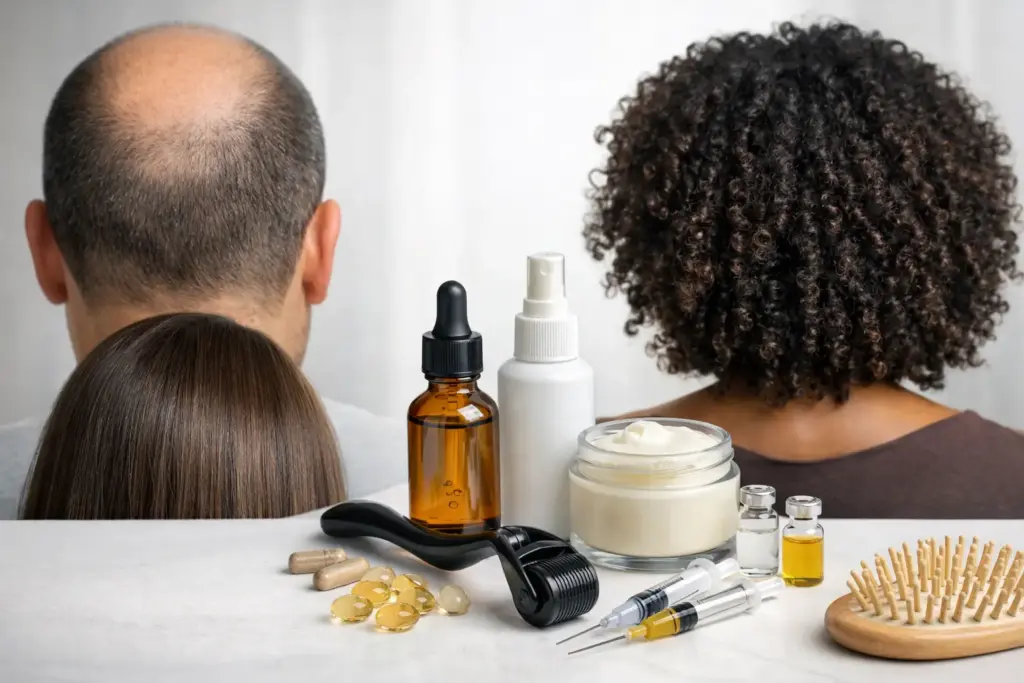
Seeing more hair in the shower, on your pillow or in your brush can feel unsettling long before anyone else notices a change. Hair loss treatments are not one-size-fits-all, and the right approach starts by understanding why your hair is thinning, shedding or receding. For many people, effective care is available, but it needs to match the type of hair loss, your medical history and your treatment goals.
Why hair loss happens
Hair follows a natural growth cycle. Most follicles grow hair for years, then move through a short resting phase before shedding and starting again. Hair loss becomes more noticeable when that cycle is disrupted, follicles gradually shrink, or fewer hairs return to the growth phase.
Hereditary hair loss is the most common cause in men and women. In men, it often appears as a receding hairline or thinning at the crown. In women, it is more likely to show as a widening parting or a general reduction in density over the top of the scalp. This pattern is influenced by genes and hormones, and it usually develops gradually.
Other causes can be more sudden. Stress, illness, surgery, rapid weight change, childbirth and nutritional deficiencies can trigger temporary shedding. This is often called telogen effluvium. Tight hairstyles, scalp conditions, some medicines and hormonal changes may also play a part. That is why choosing a treatment based on an advert or a friend’s experience can lead to disappointment – the underlying cause matters.
If hair loss is sudden, patchy, accompanied by scalp pain, scaling or redness, or follows a new medicine, speak to a GP or qualified clinician. These signs may need assessment before treatment is considered.
Hair loss treatments with evidence behind them
For androgenetic alopecia, also known as male- or female-pattern hair loss, two treatments are widely used: minoxidil and finasteride. They work differently, and neither is right for everyone.
Minoxidil for men and women
Topical minoxidil is applied directly to the scalp, commonly as a foam or solution. It can help keep follicles in their growing phase for longer and may improve hair density over time. It is used by both men and women, although the most suitable strength and application routine can vary.
Consistency matters. Results are usually assessed after several months, not several weeks. Some people experience increased shedding at the beginning, which can be alarming but may happen as hairs cycle through. Scalp irritation, dryness and unwanted facial hair growth can occur, particularly if the product runs onto the face or is used more than directed.
Minoxidil can be a sensible first option for people who want a non-prescription treatment or cannot take certain oral medicines. However, it only works while it is being used. Stopping treatment commonly means any benefit gradually reduces.
Finasteride for male-pattern hair loss
Finasteride is a prescription tablet used for male-pattern hair loss. It reduces the conversion of testosterone into dihydrotestosterone, or DHT, a hormone that contributes to follicle shrinkage in people who are genetically susceptible. By lowering DHT levels, finasteride can slow further loss and, for some men, support regrowth.
It is not a quick fix. Most people need to take it consistently for at least three to six months before judging whether it is helping, with fuller results often taking longer. As with minoxidil, ongoing use is usually needed to maintain results.
Finasteride is not suitable for everyone. Potential side effects can include changes in sexual function, mood changes and breast tenderness or enlargement. These effects are uncommon for many users but should be discussed openly before starting. Finasteride must not be used by women who are pregnant or may become pregnant, and crushed or broken tablets should not be handled during pregnancy.
A clinician-led consultation should consider your symptoms, medicines, health history and expectations. That protects against inappropriate prescribing and gives you a clear route to ask questions if something changes during treatment.
Combination treatment: when it may help
Some men use finasteride and topical minoxidil together because they address hair loss in different ways. This may be appropriate where thinning is progressing or where one treatment alone has not achieved the desired result. It also means managing two routines and two sets of possible side effects, so the decision should be practical as well as clinical.
For women, treatment plans are more individual. Topical minoxidil is commonly considered, while prescription options depend on factors such as age, hormonal status, pregnancy plans and the cause of thinning. A proper assessment is particularly valuable where hair loss is new or changing.
What about shampoos, supplements and hair transplants?
A good shampoo can make hair feel cleaner, fuller or easier to style, but it cannot reverse genetic hair loss on its own. Be cautious of products that promise dramatic regrowth without naming an active ingredient or explaining the evidence behind it.
Supplements can be useful when a genuine deficiency is present, such as low iron or vitamin D. Taking high-dose supplements without a known need is unlikely to treat hereditary hair loss and can sometimes cause harm. Biotin, for example, may interfere with some blood test results.
Hair transplantation can offer a more permanent cosmetic improvement for suitable candidates. It involves moving follicles from denser areas of the scalp to thinning areas. It is a procedure, not a cure for the process causing hair loss, so medical treatment may still be recommended to protect the surrounding native hair. The quality of assessment, surgical expertise and aftercare matter greatly.
Low-level laser devices and platelet-rich plasma treatments are also offered by some clinics. Evidence is still developing, results vary and costs can be significant. They may have a role for selected people, but they should not be presented as guaranteed alternatives to established medical treatments.
Choosing the right hair loss treatment plan
The best plan is the one you can use safely and consistently. Start by thinking about the pattern and pace of hair loss, whether there has been a trigger such as illness or stress, and what outcome feels realistic. Treatment may slow further loss, preserve existing density or produce some regrowth. A completely restored teenage hairline is not a realistic promise.
Photographs taken in the same lighting, angle and hairstyle every few months can be more useful than checking the mirror each day. Hair changes slowly, and close daily scrutiny can make normal variation feel worse than it is.
It is also worth being honest about routine. A topical treatment requires regular application and time to dry. A daily tablet may feel simpler, but it requires clinician review and an understanding of potential side effects. There is no virtue in choosing the strongest-sounding option if it is unsuitable or unlikely to fit your life.
Safe, discreet access to treatment
Online care can make starting treatment more straightforward, especially when hair loss feels personal. It should never mean cutting corners. A regulated UK pharmacy should use a detailed health questionnaire, arrange clinician review before prescription treatment is supplied, and provide clear safety information rather than relying on automated answers alone.
At Online UK Pharmacy, eligible patients can complete an online consultation that is reviewed by a UK-based prescriber. If treatment is clinically appropriate, it can be dispensed directly and sent in discreet plain packaging, with support from the same clinical team if you need advice along the way.
Be wary of any provider that offers prescription medication without checking your health information, makes guaranteed regrowth claims or gives no clear way to contact a pharmacist or prescriber. Convenience should make safe care easier to access, not remove the safeguards that make treatment appropriate.
When to seek medical advice sooner
Do not wait for an online hair loss treatment if you have circular bald patches, sudden shedding in large clumps, loss of eyebrows or body hair, a painful or inflamed scalp, or symptoms such as fatigue, weight changes or heavy periods. These can point to a condition that needs investigation.
Equally, if hair loss is affecting your confidence or day-to-day wellbeing, it is reasonable to ask for help early. The sooner pattern hair loss is treated, the more hair there may be to preserve. A measured, clinician-guided plan gives you something more useful than false promises: a clear next step and the confidence that your care is built around you.